

The Future of WordPress: AI, Automation & Performance Trends
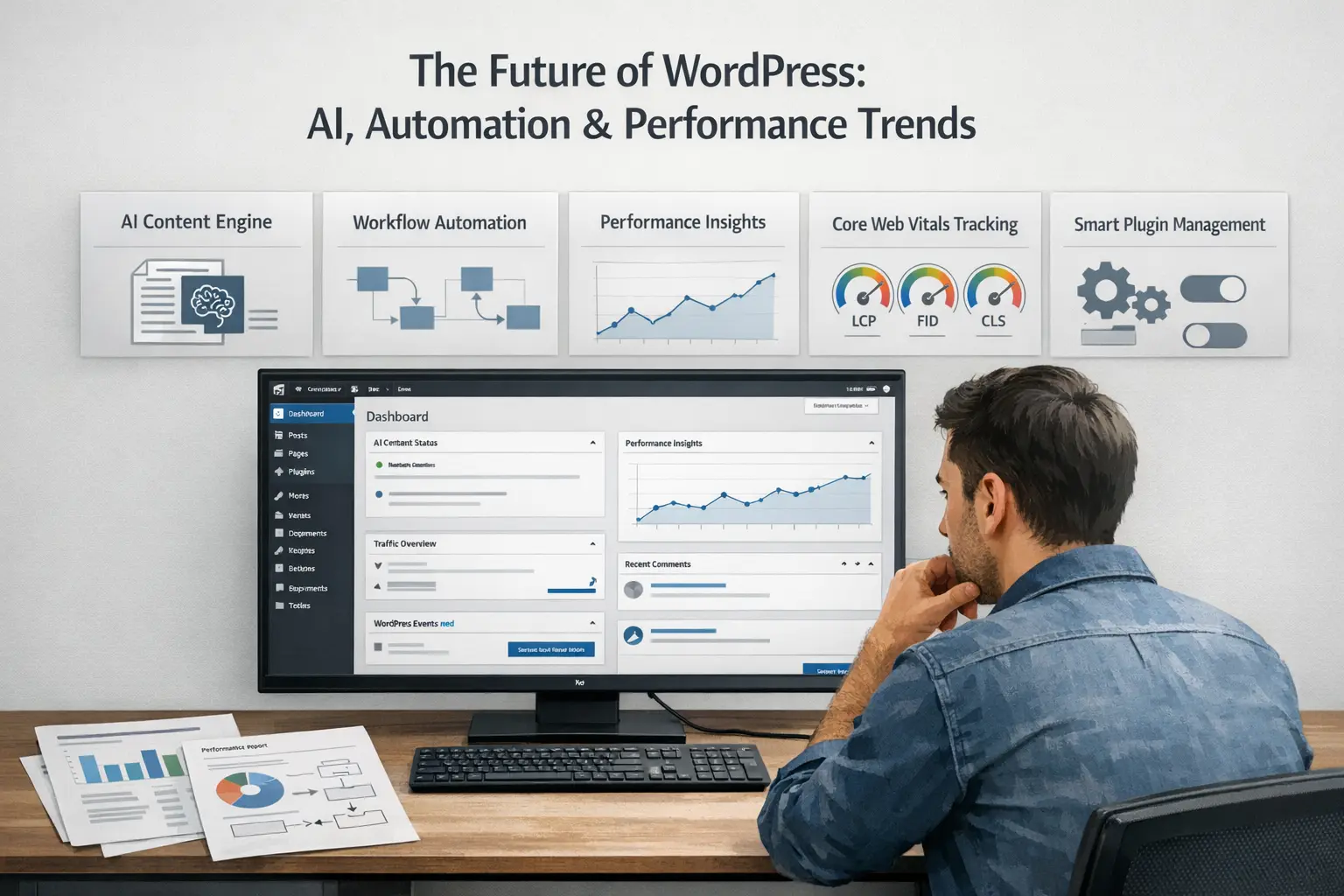
WordPress powers over 43% of all websites on the internet, and it’s no surprise — its flexibility, vast plugin ecosystem, and ease of use have kept it at the top of the CMS world. But with rapid advancements in artificial intelligence (AI), automation, and web performance technologies, the WordPress landscape is evolving faster than ever.
In this article, we’ll explore:
- Why WordPress continues to dominate
- How AI is reshaping content creation and site management
- The newest automation tools and workflows
- Performance trends that drive SEO, conversions, and user experience
- What to expect in the next 3–5 years
Whether you’re a WordPress developer, website owner, or digital marketer, this deep dive will help you understand where WordPress is headed and how to stay ahead.
1. Why WordPress Continues to Lead the Web
WordPress isn’t just a CMS — it’s an ecosystem.
Despite the rise of website builders like Wix and Shopify, WordPress remains the most powerful and customizable option. According to W3Techs, more than 40% of the web runs on WordPress — from small blogs to enterprise websites.
Key Strengths of WordPress
- Open-source freedom — anyone can build, modify, or extend it
- Massive plugin & theme ecosystem — over 58,000 plugins
- Scalability — from blogs to high-traffic platforms
- SEO performance — via built-in tools and plugins like Yoast
These core strengths provide the foundation for the trends we’ll explore next.
2. How AI is Shaping WordPress Development
Artificial Intelligence is no longer futuristic — it’s here, and it’s reshaping the way websites are created and managed.
AI for Content Creation
Content is king in SEO and digital marketing, and AI has become a critical tool for accelerating content production.
Now, WordPress authors can use AI to:
- Generate blog posts and landing pages
- Perform keyword research automatically
- Write meta descriptions and SEO titles
- Suggest internal links and content optimization
Tools like AI writing assistants, GPT-powered plugins, and smart SEO analyzers are enabling content teams to produce better quality faster.
AI for Image & Media Optimization
AI isn’t limited to text.
Smart tools can now automatically:
- Compress and resize images without loss of quality
- Generate alt tags for accessibility and SEO
- Create visual content using AI art models
- Detect duplicate media files
This saves time and enhances web performance, a critical factor for SEO ranking.
AI Chatbots and User Engagement
Interactive chatbots powered by AI are now easily integrated into WordPress sites.
Benefits include:
- 24/7 customer support
- Lead generation automation
- Personalized user experiences
- Reduced bounce rate
For eCommerce websites, AI chatbots can suggest products, recover abandoned carts, and interact in natural language, improving conversions.
3. Automation Trends in WordPress
Automation is about doing more with less — especially when managing large or complex websites.
Automated Workflows for Developers
Developers are adopting tools like GitHub Actions, CI/CD pipelines, and staging automation for testing and deployment.
Benefits include:
- Reduced human error
- Faster updates
- Rollbacks & backups on demand
Automation isn’t a luxury — it’s becoming a necessity in professional WordPress development.
SEO & Marketing Automation
Marketing automation is transforming WordPress into a conversion engine.
Examples include:
- Automated email sequences
- Trigger-based popups
- Scheduled content publishing
- Behavioral tracking & personalization
With automation tools like HubSpot, ActiveCampaign, and WordPress CRM integrations, website owners can automate entire sales funnels.
Automatic Backups and Security Scans
Security is critical for every WordPress site.
Automated tools now:
- Run nightly backups
- Scan for malware daily
- Auto-patch vulnerabilities
- Monitor uptime and performance
This trend drastically reduces risk and provides peace of mind to site owners.
4. Performance Trends Driving WordPress Forward
Fast websites rank better in search engines, convert more users, and provide improved user experiences.
Core Web Vitals and SEO Performance
Google’s Core Web Vitals focus on:
- Largest Contentful Paint (LCP)
- First Input Delay (FID)
- Cumulative Layout Shift (CLS)
WordPress themes and plugins now prioritize:
- Lazy loading
- Server-side rendering
- Optimized scripts and CSS
- CDN integration
This optimization directly improves search rankings.
Headless WordPress and Decoupled Architecture
Headless WordPress separates the backend from the frontend, allowing the site to deliver content faster through APIs.
Benefits include:
- Ultra-fast page loads
- Better scalability
- Flexible front-end frameworks (React, Vue, Next.js)
While more technical, headless architectures are gaining popularity among high-traffic platforms.
Mobile-First Performance
With most web traffic coming from mobile devices, responsive and optimized mobile experiences are non-negotiable.
Trends include:
- Adaptive loading techniques
- AMP alternatives
- Progressive Web Apps (PWAs) for WordPress
Mobile performance directly impacts SEO, bounce rates, and conversions.
5. Security Trends in WordPress
As WordPress grows, so do security threats. But new trends are emerging to keep websites safe.
AI-Powered Threat Detection
AI can now analyze traffic patterns, detect anomalies, and block malicious behavior in real time.
This includes:
- Bad bot mitigation
- Login spam protection
- Firewall automation
- Zero-day exploit detection
These tools enhance security without slowing the user experience.
Zero Trust Authentication
Modern WordPress security is moving toward:
- Multi-factor authentication (MFA)
- Role-based access controls
- Passwordless login options
These trends help prevent breaches and unauthorized access.
6. The Role of Plugins in WordPress’s Future
Plugins are the backbone of WordPress. But with rising performance standards and security concerns, plugin trends are changing.
Modular & Lightweight Plugins
Instead of all-in-one plugin suites, the future is modular — pick only the features you need.
Benefits:
- Reduced bloat
- Better performance
- Easier updates
Even giant plugin ecosystems like Elementor, WooCommerce, and Yoast are adapting with performance centers and add-on modules.
AI Enhanced Plugins
Plugins built with AI can now:
- Suggest SEO improvements
- Autogenerate content outlines
- Auto-tag media
- Improve accessibility
The next generation of WordPress plugins will blur the line between software and intelligence.
7. Ecommerce and WordPress Trends
WooCommerce remains one of the most popular eCommerce platforms globally — and it’s evolving fast.
AI for Product Recommendations
AI tools now analyze user behavior and display personalized product suggestions, boosting conversions.
Voice Commerce and WordPress
With voice assistants becoming mainstream, voice search optimization and voice shopping are emerging trends.
8. Community and Open Source Innovation
WordPress is more than software — it’s a global community.
From WordCamps to Slack channels, developers, designers, and users contribute to the ecosystem.
Future trends include:
- Collaborative AI governance
- Open source machine learning tools
- Community-driven performance benchmarks
This collective innovation keeps WordPress adaptable and future-proof.
9. What WordPress Users Should Do Now
Here’s a practical checklist to prepare for the future:
✔️ Audit Your Current Website
Evaluate:
- Loading speed
- Security posture
- Plugin performance
- Mobile responsiveness
✔️ Invest in AI-Friendly Tools
Look for plugins with built-in intelligence and automation capabilities.
✔️ Optimize for Core Web Vitals
Speed is no longer optional — Google rewards performance.
✔️ Plan for Automation Workflows
From backups to content publishing, automation will save time and resources.
10. The Next 3–5 Years: What to Expect
AI Becomes Standard, Not Special
AI will no longer be a “feature” — it will be expected in:
- SEO tools
- design tools
- analytics reporting
- customer support
- personalized content
Web Performance Equals Market Share
Fast websites will outrank and outperform competitors, especially in eCommerce and SaaS.
Microservices and Headless Architectures Grow
Websites will be less monolithic, more flexible, and more API-driven.
Conclusion: Adapt or Be Left Behind
The future of WordPress is driven by AI, automation, and performance trends.
Whether you’re a developer, marketer, or business owner, the message is clear:
👉 Embrace innovation. Optimize constantly. Stay ahead of trends.
With the right tools and strategy, your WordPress site won’t just survive the future — it will thrive in it.
4 thoughts on “The Future of WordPress: AI, Automation & Performance Trends”
big baller monopoly live http://monopoly-live-india.com .
monopoly live big win today monopoly live big win today .
monopoly live evolution monopoly live evolution .
monopoly live casino score https://live-monopoly-india.com/